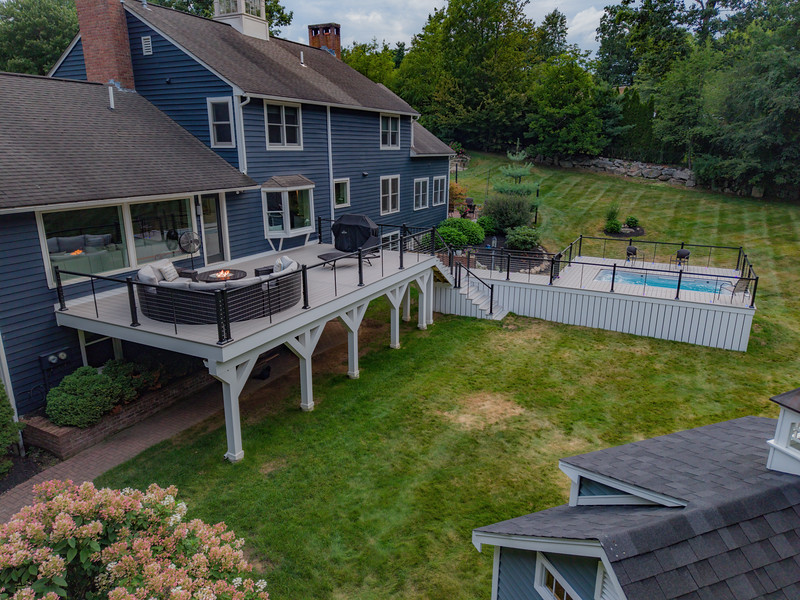
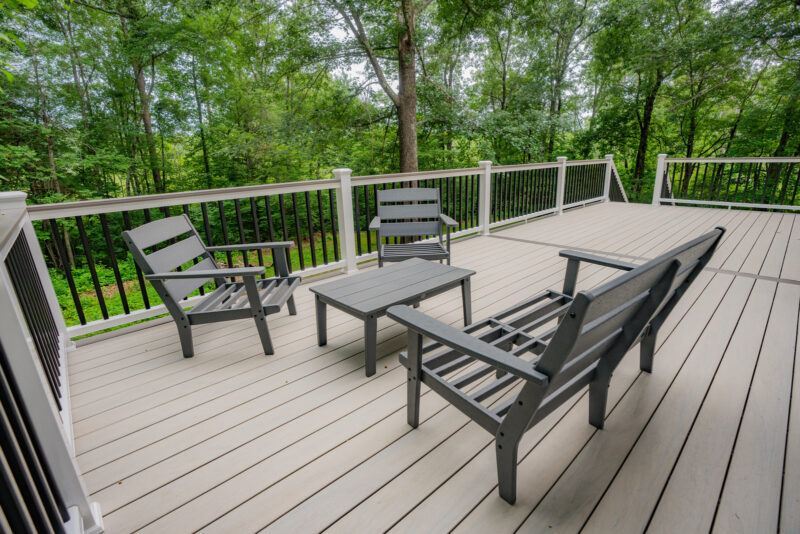
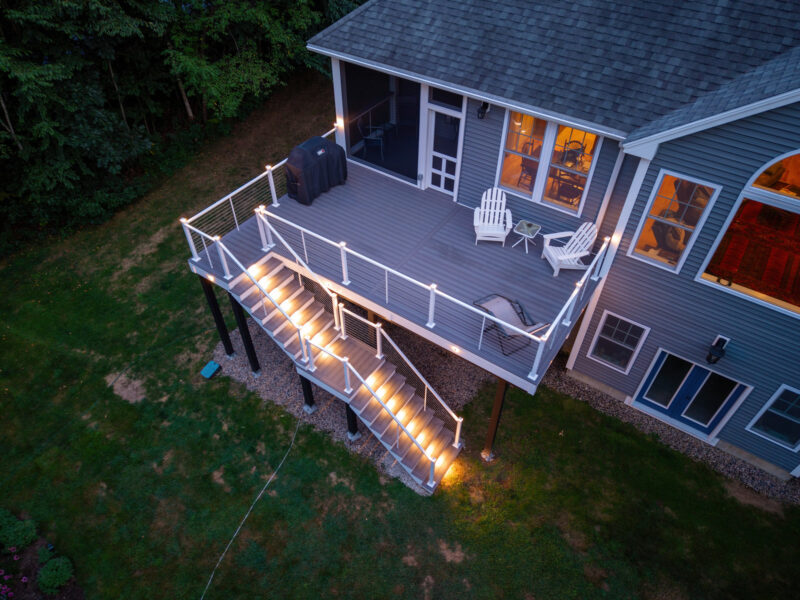
Choosing the right decking material can make a big difference in how your new deck looks, performs, and holds up over time. From maintenance and durability to color and cost, there are several factors to consider. Here’s what to know when choosing the best decking material for your home.

One of the first decisions to make is how much time you want to spend maintaining your deck. Traditional wood can provide a classic appearance, but it generally requires more ongoing maintenance to protect it from moisture, fading, cracking, and other effects of outdoor exposure.
Composite and PVC decking are popular alternatives for homeowners who want to spend more time enjoying their deck and less time maintaining it. These materials are designed to provide long-lasting performance without the routine staining, painting, and sealing associated with traditional wood.
For many homeowners investing in a custom deck, the additional upfront cost of a premium composite or PVC product can be worthwhile when considering maintenance and performance over the life of the deck.
Your decking material needs to withstand more than everyday foot traffic. Here in New England, decks are exposed to hot summer sun, heavy rain, snow, ice, freezing temperatures, and repeated freeze-thaw cycles.
Moisture resistance is particularly important. Decking that absorbs moisture can become more susceptible to deterioration over time, which is one reason composite and PVC decking have become popular choices throughout New Hampshire and Massachusetts.
When comparing materials, look beyond appearance and consider how the product is designed to perform after years of exposure to the elements.
Decking is a major visual component of your home’s exterior, so the material you choose should complement the architecture and existing finishes of the property.
Modern composite and PVC decking is available in a huge variety of colors, grain patterns, textures, and finishes. You can choose anything from warm, traditional wood tones to darker contemporary colors and lighter coastal-inspired finishes.
Don’t forget about the details either. Decking color can be coordinated with railings, borders, stairs, fascia, lighting, and other features to give your finished outdoor space a more intentional look.
Our 3D deck design process can help you visualize different layouts, colors, materials, railings, and features before construction begins.
Composite and PVC decking are sometimes grouped together, but there are important differences between them.
Composite decking typically combines wood fibers with synthetic materials to create boards designed to provide the appearance of wood with less maintenance. There are numerous product lines available at different price points, making composite a versatile option for many homeowners.
PVC decking is manufactured without wood fibers. Its synthetic construction provides excellent resistance to moisture and makes it a particularly attractive option for homeowners looking for premium, low-maintenance performance.
Neither material is automatically the best choice for every deck. Your budget, preferred appearance, location, sun exposure, and how you plan to use the space should all be considered.

Timbertech decking
TimberTech is one of our preferred choices for homeowners looking for premium, low-maintenance decking. The company offers a wide range of composite and PVC options designed to recreate the appearance of natural wood while providing greater resistance to the elements.
One of TimberTech’s biggest advantages is the variety available. Homeowners can choose from numerous colors, wood grain patterns, collections, and price points, making it possible to find an option that works with both the home’s design and the project’s budget.
TimberTech can be an excellent choice if you want:
If you’re unsure which collection is right for your project, Modernize It can help you compare options and see how different materials will look as part of your custom deck design.
AZEK is an excellent option for homeowners looking for premium PVC decking with strong moisture resistance and minimal maintenance requirements.
Because AZEK decking is made without wood fibers, it doesn’t react to moisture in the same way traditional wood decking can. This makes it particularly appealing for decks exposed to New England rain and snow, as well as pool decks and other areas where moisture may be a concern.
AZEK also offers high-end wood-inspired colors and finishes that allow homeowners to get the appearance of natural wood without the same maintenance requirements.
AZEK may be a good choice if you prioritize:
You can browse our completed deck projects to see how premium decking materials can completely change the appearance of an outdoor space.

Deckorators is another preferred decking manufacturer we work with at Modernize It. The brand offers low-maintenance decking, railing, and complementary products that provide plenty of flexibility when designing a custom outdoor space.
Deckorators can be especially appealing for homeowners looking to incorporate distinctive colors, borders, railings, stairs, and other design details into their deck.
Deckorators may be a good fit if you’re looking for:
Working with multiple manufacturers allows Modernize It to recommend a decking product based on your project rather than forcing every homeowner into the same material or product line.

Where your deck is located can influence which material makes the most sense.
A deck that receives direct sunlight throughout most of the day has different considerations than a shaded deck surrounded by trees. Pool decks have additional moisture exposure, while elevated decks may make the underside of the decking more visible.
Consider factors such as:
An experienced deck builder can evaluate the property and help you compare materials based on the conditions around your home.
Budget is an important part of choosing decking, but the cheapest material isn’t always the least expensive option over the long term.
Consider the initial material cost alongside maintenance, expected lifespan, warranties, and how frequently a product may need to be stained, sealed, repaired, or replaced.
Premium composite and PVC decking typically costs more upfront than basic pressure-treated lumber. In return, many homeowners choose these materials because they require significantly less routine maintenance and provide more consistent appearance and performance over time.
The goal should be to find the best balance between your budget, desired appearance, maintenance expectations, and long-term plans for the home.
Photos are helpful, but decking can look very different in person. Before making your final decision, compare physical samples whenever possible.
Look at the grain, texture, and color in natural light. Consider how the decking will look next to your home’s siding, trim, doors, roof, and surrounding landscaping.
For larger projects, 3D deck design can take this a step further by showing how your material selections work with the overall layout of the deck. This can be especially useful when choosing contrasting borders, railings, stairs, privacy walls, and other custom features.
Not sure which decking material is right for your project? Modernize It can help you compare your options and design a custom deck built for your home.